Middle and high school students commuting on public transportation in Seoul could receive up to 160,000 won ($119) a year toward their fares by 2030 under a phased plan proposed by the city’s education office.
The Seoul Metropolitan Office of Education plans to test the program with high school seniors in 2028, before expanding it to all high schoolers in 2029 and middle school students the following year.
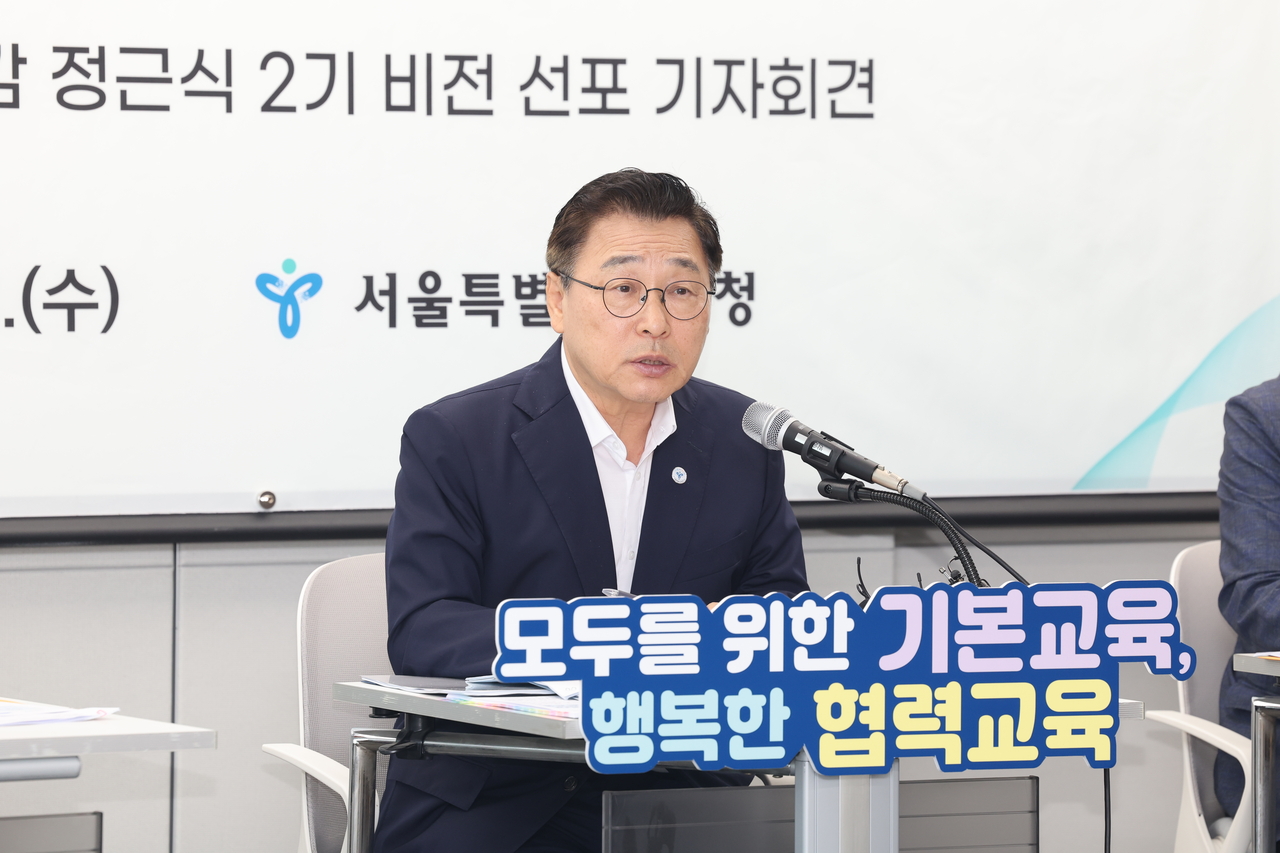
The proposal was outlined in a recently released white paper from a committee tasked with translating Seoul Education Superintendent Jung Geun-sik’s campaign pledges into policy. Jung was reelected in June after winning the post in a 2024 by-election.
Transportation assistance was one of his main reelection pledges.
“Going to school is compulsory. Some students walk to school, while others have to take a bus,” Jung said during the campaign. “I think it is right to at least support students who need to use public transportation to commute.”
The program would be limited to students who use buses or subways to get to school. Students at special schools and out-of-school youths would not qualify.
Elementary school students would also be excluded. The education office said most attend schools close to their homes, while transportation is generally provided when they must travel longer distances.
An estimated 164,000 Seoul middle and high school students, or 42 percent of the total, commute by public transportation.
Students would be reimbursed for up to 160,000 won a year, roughly equivalent to the cost of one trip to school on each of the approximately 190 school days. A single bus or subway ride for teenagers currently costs 900 won in Seoul, bringing the estimated annual cost of one-way school commutes to about 170,000 won.
Buses are the most common form of public transportation for students, accounting for 33.9 percent of commutes, according to city data. An additional 2.3 percent travel only by subway, while 5.7 percent use both buses and subways.
About 83 percent of students reach school within 30 minutes, while 16.7 percent commute for longer. The average journey takes about 21 minutes.
Rather than create a separate payment system, the education office is considering using existing transit platforms, including Tmoney and Seoul’s public transportation pass.
One option would be to reimburse students based on transit-use records. Officials are also considering whether school-related journeys could be identified using the time and day of travel. The white paper does not explain how student data would be collected or protected.
The education office plans to consult through next year with the Seoul Metropolitan Government, district offices, the Tmoney Foundation and the Ministry of Health and Welfare.
Under the proposed schedule, the 2028 pilot would cover the final-year cohort of 67,477 students. The program would expand to all three high school grades, comprising 192,103 students, in 2029 and to the six middle and high school grades, comprising 355,902 students, in 2030.
Those figures represent the student populations covered by each stage, not necessarily the number who would receive reimbursements. The education office estimates that only about 164,000 middle and high school students currently use public transportation to get to school.
The program is projected to cost 8.1 billion won in 2028, 23.1 billion won in 2029 and 29.3 billion won in the first half of 2030, for a total of 60.4 billion won through June 2030. The funding is not yet finalized.
seungku99@heraldcorp.com